Eine vollständige Testsuite aus jeder Funktion oder Feature-Beschreibung generieren
Warum dieser Prompt wichtig ist
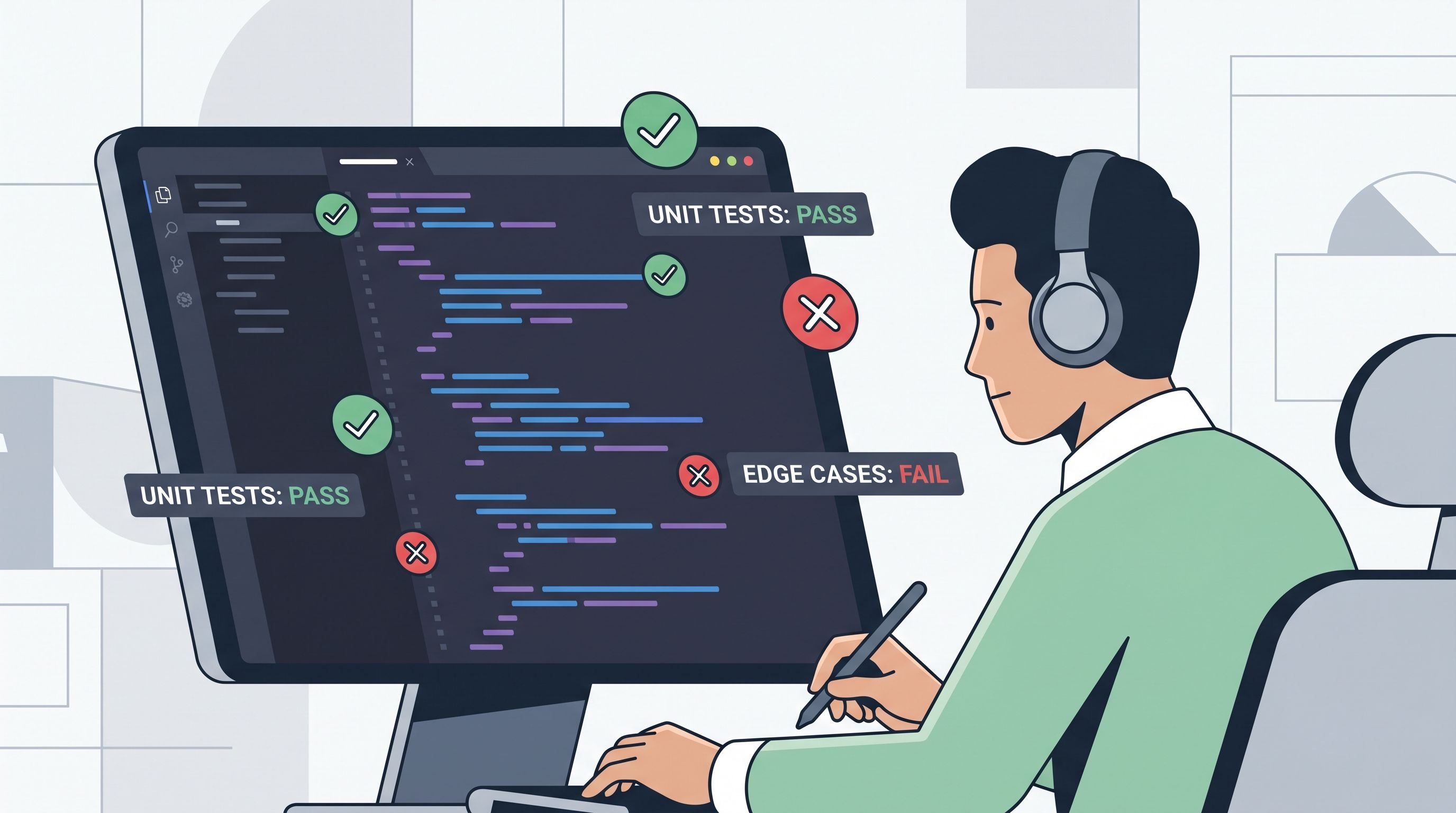
<p>Incomplete tests are the leading cause of regressions in production. A typical developer writing tests from memory covers 60-70% of edge cases — the remaining 30% is where bugs live. Every missed edge case is a future incident, a 2am page, or a data corruption bug discovered by a customer. Beyond bugs: code without proper tests blocks confident refactoring. You end up with unmaintainable spaghetti because nobody dares touch it. This prompt forces systematic coverage across happy paths, boundaries, failures, and integration points — the same coverage a dedicated QA engineer would produce in several hours, generated in under a minute.</p>
Wofür wir ihn verwenden
You wrote a function or shipped a feature and need full test coverage before merging. You have the code in front of you but writing tests feels slow — you keep forgetting edge cases and your PR review always comes back with 'what about null input?' or 'does this handle timeout?'
Prompt
Act as a senior software engineer and QA architect with deep expertise in test-driven development.

Context:
I have a [FUNCTION / FEATURE / MODULE] that I need fully tested. It is written in [PROGRAMMING LANGUAGE] and uses [FRAMEWORK / LIBRARY if any]. Here is the code or description:

[PASTE YOUR FUNCTION OR FEATURE DESCRIPTION HERE]

Task:
Generate a comprehensive test suite for the above. Cover ALL of the following:
1. Happy-path unit tests
2. Edge case unit tests
3. Error/failure scenarios
4. Integration test outlines
5. Security-relevant tests if applicable

Constraints:
- Write tests in [TEST FRAMEWORK, e.g. Jest, pytest, JUnit]
- Name tests: should_[expected behavior]_when_[condition]
- Do NOT write implementation code
- Group tests into describe blocks by category
- Flag any testability issues in the original code

Output Format:
- Full runnable test file with all imports
- Section comments: // === HAPPY PATH ===, // === EDGE CASES ===, etc.
- Summary table: test count per category + estimated code coverage %
- Testability issue flags
Das Problem mit manuell geschriebenen Tests
Fragt man Entwickler, was sie unter Zeitdruck als Erstes weglassen, nennen sie fast immer die Tests. Das Schreiben umfassender Tests ist mühsam und geistig anstrengend. Die meisten Entwickler übersehen 30-40 % der relevanten Randfälle.
Dieser Prompt löst das, indem er das systematische Denken eines erfahrenen QA-Ingenieurs in eine wiederverwendbare Vorlage packt.
Was diesen Prompt effektiv macht
Der Prompt verwendet ein Abdeckungs-Framework mit fünf Kategorien: Happy Path, Randfälle, Fehler, Integration und Sicherheit. Die Vorgabe, Tests mit should_[behavior]_when_[condition] zu benennen, zwingt die KI zu präzisen Namen. Die Anforderung, Testbarkeitsprobleme zu markieren, fängt architektonische Schwächen ein, bevor sie zu technischen Schulden werden.
So wird's angewendet
Fügen Sie den Prompt in Claude Sonnet 4.5 (oder GPT-4o) ein. Füllen Sie die drei Felder aus: Ihre Programmiersprache, Ihr Test-Framework und die Funktionsbeschreibung. Das Ergebnis ist eine sofort ausführbare Testdatei plus eine Zusammenfassungstabelle zur Testabdeckung.
Anpassung an verschiedene Sprachen und Frameworks
Für Python pytest, für TypeScript Jest oder Vitest, für Java JUnit 5, für Go Go testing package.