Dieser KI-Prompt verwandelt Umfragedaten in einen Aktionsplan
Warum dieser Prompt wichtig ist
Survey projects often fail at the last mile. Teams collect hundreds of responses, then waste hours manually clustering comments, arguing over weak patterns, or presenting leadership with a pile of disconnected charts. A strong analysis prompt turns messy feedback into prioritized decisions, which helps teams act faster and reduces the risk of overreacting to the loudest comments instead of the strongest signals.
Wofür wir ihn verwenden
You have just closed a customer or employee survey and need to brief leadership before the next planning meeting. Instead of dumping charts into slides, you need a fast, decision-oriented readout that explains what changed, what matters most, and what the team should do next.
Prompt
Role: Act as a senior research analyst and insight strategist for [COMPANY / TEAM NAME].

Context: I will give you raw survey data, pasted comments, response counts, rating breakdowns, and background on what decision we need to make. The audience is [EXECUTIVE TEAM / PRODUCT TEAM / CUSTOMER SUCCESS / MARKETING]. The survey goal is [GOAL OF THE SURVEY]. The data may be messy, repetitive, emotionally charged, or incomplete.

Task: Analyze the survey results and turn them into an executive-ready insight report that explains what matters, what is noise, and what actions should happen next.

Constraints:
1. Separate quantitative patterns from qualitative themes.
2. Identify the 5-7 most important findings, not every possible observation.
3. Highlight contradictions, outliers, weak signals, and data limitations.
4. Do not overclaim causation when the survey only supports correlation or directional insight.
5. If sample size, question wording, or response quality weakens confidence, say so explicitly.
6. Quote short respondent comments only when they sharpen a theme.
7. Prioritize decisions and actions by likely business impact and ease of implementation.
8. If the dataset suggests different conclusions for different segments, split them clearly by [CUSTOMER TYPE / REGION / TEAM / ROLE / TENURE].
9. Keep the writing concise, specific, and executive-friendly. Avoid generic filler.

Output Format:
1. Survey Snapshot
   - Purpose of survey
   - Who responded
   - Sample size
   - Important caveats

2. Key Findings
   - Ranked list of the most important findings
   - Evidence for each finding
   - Confidence level: High / Medium / Low

3. Theme Breakdown
   - Top recurring positive themes
   - Top recurring negative themes
   - Surprising or contradictory themes

4. Segment Differences
   - Differences by [SEGMENT TYPE]
   - What each difference may imply

5. Recommended Actions
   - Immediate actions for the next 30 days
   - Medium-term actions for the next 90 days
   - One action to avoid because the data does not support it

6. Executive Summary
   - A final 150-200 word summary for leadership

Data to analyze:
[PASTE SURVEY SCORES, TABLES, COMMENTS, AND CONTEXT HERE]
Ergebnis
Survey Snapshot: The survey was designed to understand why trial users of AcmeFlow were not converting to paid plans after the first 14 days. We received 842 responses from users in North America and Europe, including 311 product managers, 228 operations leads, 179 founders, and 124 analysts. The strongest caveat is self-selection bias: dissatisfied users were slightly more likely to leave open-text feedback than satisfied users. We should treat the qualitative comments as directional, not perfectly representative.
Key Findings: First, setup friction is the single biggest conversion blocker. Forty-six percent of respondents who did not upgrade said they were unsure how to configure workflows after initial onboarding. Confidence: High. Second, value perception depends heavily on role. Founders responded positively to dashboard visibility, while operations leads cared more about automation reliability and integration depth. Confidence: High. Third, pricing is a secondary issue, not the primary one. Only 18 percent cited price alone, but 39 percent said price felt too high relative to the value they reached in the first week. Confidence: Medium. Fourth, support quality is performing well but is underused. Many respondents praised support once they engaged, yet only 22 percent of struggling users contacted the team. Confidence: Medium. Fifth, European respondents showed higher concern about data export and compliance documentation than North American respondents. Confidence: Medium.
Theme Breakdown: Positive themes included fast reporting, clean UI, and strong cross-team visibility. Negative themes clustered around confusing setup steps, unclear templates, and unreliable first-time integrations with Slack and HubSpot. A surprising contradiction emerged in workflow complexity: advanced users wanted more control, while new users felt overwhelmed by the same flexibility.
Recommended Actions: In the next 30 days, the team should simplify first-run setup into a guided path with three opinionated templates, add an in-app prompt to contact support after failed integration attempts, and rewrite pricing-page messaging around time-to-value rather than feature volume. Over the next 90 days, the team should create role-specific onboarding for operations leads, expand integration diagnostics, and publish clearer compliance documentation for EU buyers. One action to avoid: cutting price immediately. The survey does not show a pure pricing problem; it shows a delayed value realization problem.
Executive Summary: Users are not rejecting the product’s promise. They are struggling to reach the moment where that promise becomes obvious. The biggest opportunity is to reduce setup friction, especially for operations-heavy teams, while clarifying role-based value much earlier in the trial. Pricing pressure exists, but it is mostly downstream of weak onboarding and uneven activation. If AcmeFlow improves first-week guidance and integration reliability, conversion should rise without requiring broad discounting.
Die meisten Teams haben kein Problem damit, Umfragedaten zu sammeln. Die Herausforderung ist, die Ergebnisse so zu erklären, dass man nicht alle in Charts, Kommentaren und widersprüchlichen Interpretationen ertränkt.
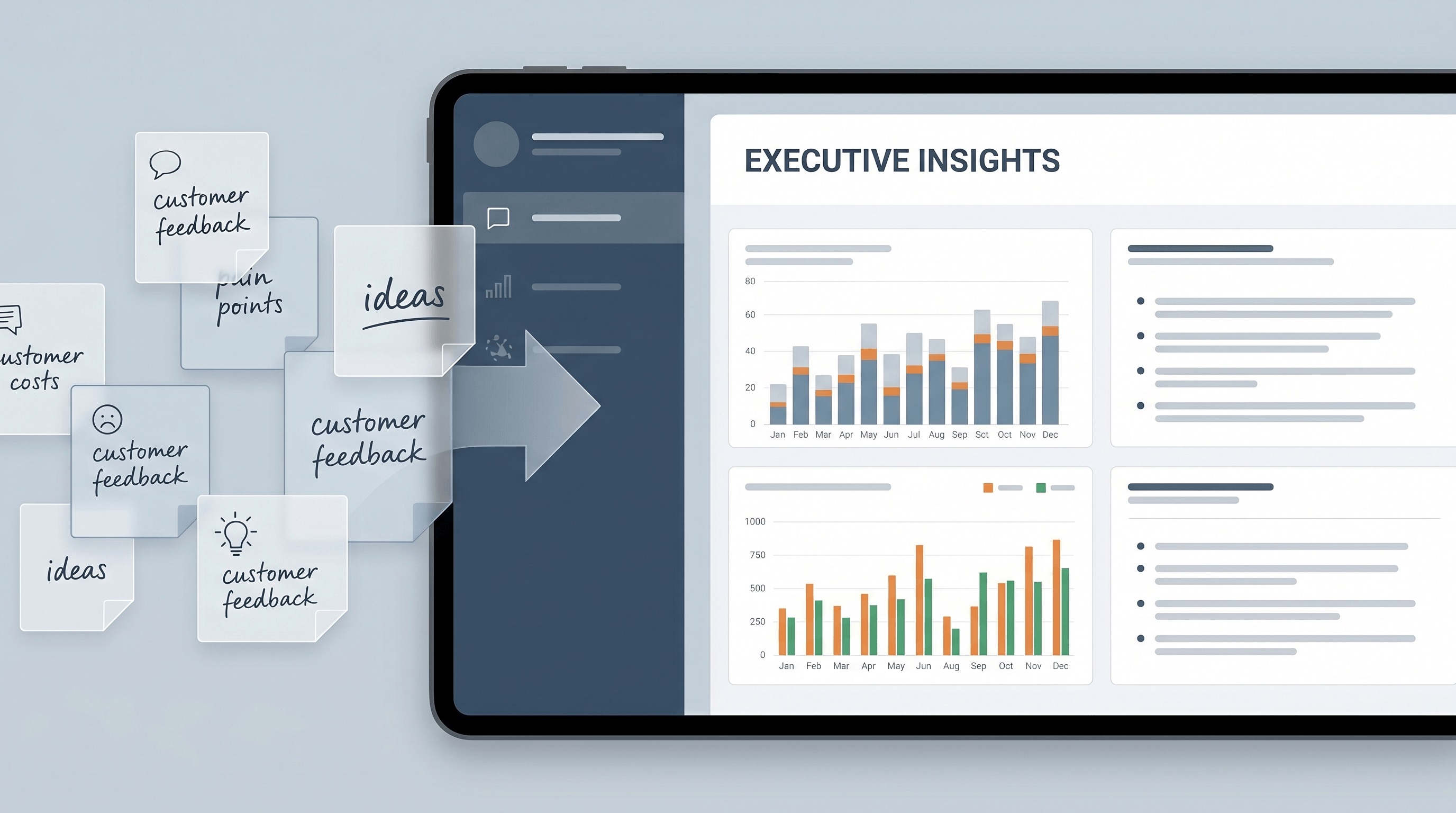
Dieser Prompt schließt genau diese Lücke. Er verwandelt chaotische Umfrageantworten in eine strukturierte Analyse, die Signal vom Rauschen trennt, die wichtigsten Erkenntnisse priorisiert und mit konkreten Handlungsschritten endet – statt mit vagen Beobachtungen.
Warum dieser Prompt funktioniert
Die Struktur zwingt das Modell, mehr zu tun als nur zusammenzufassen. Es muss quantitative Muster von qualitativen Themen trennen, Vertrauenslevel zuweisen, schwache Belege markieren und falsche Sicherheit vermeiden. Das ist wichtig, weil die Umfrageanalyse oft dann schiefgeht, wenn Teams jeden Kommentar gleich wichtig nehmen oder Korrelation mit Kausalität verwechseln.
Außerdem enthält er eine Segmentanalyse – und dort liegen oft die wahren Erkenntnisse. Ein einzelner Durchschnittswert kann massive Unterschiede zwischen Neukunden und Power-Usern oder zwischen verschiedenen Regionen verbergen. Der Prompt macht diese Unterschiede sichtbar, statt sie einzuebnen.
Warum es sich lohnt, ihn zu speichern
Das ist kein einmaliger Prompt für eine nette Demo. Er eignet sich für Mitarbeiterbefragungen, Kundenzufriedenheitsstudien, Feedback nach dem Launch, Churn-Analysen, Event-Follow-up-Formulare und interne Prozessüberprüfungen.
Der finale Output ist auf echte Entscheidungen ausgelegt. Statt der Führungsebene eine Tabellenkalkulation und einen Haufen Zitate zu präsentieren, erhältst du priorisierte Erkenntnisse, Widersprüche, Segmentunterschiede und konkrete nächste Schritte. Das macht den Prompt für wöchentliche und monatliche Reporting-Zyklen praktisch.
So nutzt du ihn optimal
Füge sowohl die Zahlen als auch die Kommentare ein. Gib die Anzahl der Antworten, die Stichprobengröße und bekannte Einschränkungen an. Wenn du ein besseres Ergebnis willst, nenne die Zielgruppe und die Entscheidung, die von der Umfrage abhängt.
Gute Eingaben verbessern das Ergebnis enorm. Weiß das Modell, ob der Bericht für Product, Operations, HR oder die Geschäftsführung ist, kann es die richtigen Erkenntnisse priorisieren und auf dem passenden Detailniveau schreiben.
Beste Anwendungsfälle
Dieser Prompt ist besonders stark, wenn das Feedback chaotisch, emotional, repetitiv oder über mehrere Befragtengruppen verstreut ist. Er hilft, aus unvollständigen Daten eine klare Erzählung zu formen, ohne so zu tun, als seien die Daten präziser, als sie wirklich sind.
Diese Balance ist der wahre Wert. Eine nützliche Umfragezusammenfassung beschreibt nicht nur die Antworten. Sie hilft einem Team, die nächsten Schritte zu entscheiden.