Prompt لمصفوفة قرار مرجحة لاتخاذ اختيارات الفريق بسرعة أكبر
لماذا تهم هذه المطالبة
Teams waste weeks revisiting the same decision when criteria are implicit, stakeholders optimize for different goals, and nobody can explain why an option won. A weighted matrix turns vague debate into an auditable decision record and exposes where disagreement actually lives.
فيم نستخدمها
Use this when you need to choose between several real options under time pressure, such as selecting a project management tool, vendor, framework, or job offer, and you want a defensible recommendation instead of gut feel.
المطالبة
Role: Act as a senior strategy analyst helping me make a high-stakes decision with a transparent weighted scoring model.

Context: I am deciding between [OPTION 1], [OPTION 2], [OPTION 3], and [OPTION 4] for [DECISION CONTEXT]. The decision matters because [WHY THIS DECISION MATTERS]. My constraints include [BUDGET], [TIMELINE], [TEAM SIZE], and [NON-NEGOTIABLE REQUIREMENTS].

Task: Build a weighted decision matrix that compares the options across the criteria I provide. Use these criteria and weights, adding up to 100: [CRITERION 1 + WEIGHT], [CRITERION 2 + WEIGHT], [CRITERION 3 + WEIGHT], [CRITERION 4 + WEIGHT], [CRITERION 5 + WEIGHT]. Score each option from 1 to 10 on every criterion, explain each score in one or two sentences, calculate weighted totals, rank the options, and recommend the best choice. Then stress-test the recommendation by showing which option would win if the top-weighted criterion changed by plus or minus [SENSITIVITY %].

Constraints: Do not use vague language. If information is missing, list the missing inputs explicitly and make the smallest reasonable assumption. Do not force a tie. Call out hidden risks, second-order effects, and cases where the highest-scoring option may still be the wrong practical choice.

Output Format: 1) Decision summary, 2) assumptions and missing data, 3) weighted decision matrix in table form, 4) ranking with weighted totals, 5) recommendation with rationale, 6) sensitivity analysis, 7) next steps before committing.
النتيجة
Decision summary: Based on the weighted matrix, Notion is the strongest fit for a 12-person remote product team choosing a project management platform for the next 18 months. It does not win every category, but it delivers the best overall balance of flexibility, cross-functional collaboration, documentation, and cost. Jira remains the better pure engineering tracker, while Asana is the easiest to adopt quickly, but neither matches Notion's combined score across the broader operating model this team needs.
Assumptions and missing data: I assumed the team needs one shared workspace for product, engineering, design, and operations, with a monthly software budget below $500. I also assumed the company values fast onboarding and documentation quality as much as sprint planning. Missing inputs that would affect the outcome include existing tool lock-in, compliance requirements, and whether the engineering team needs advanced issue hierarchy and release reporting.
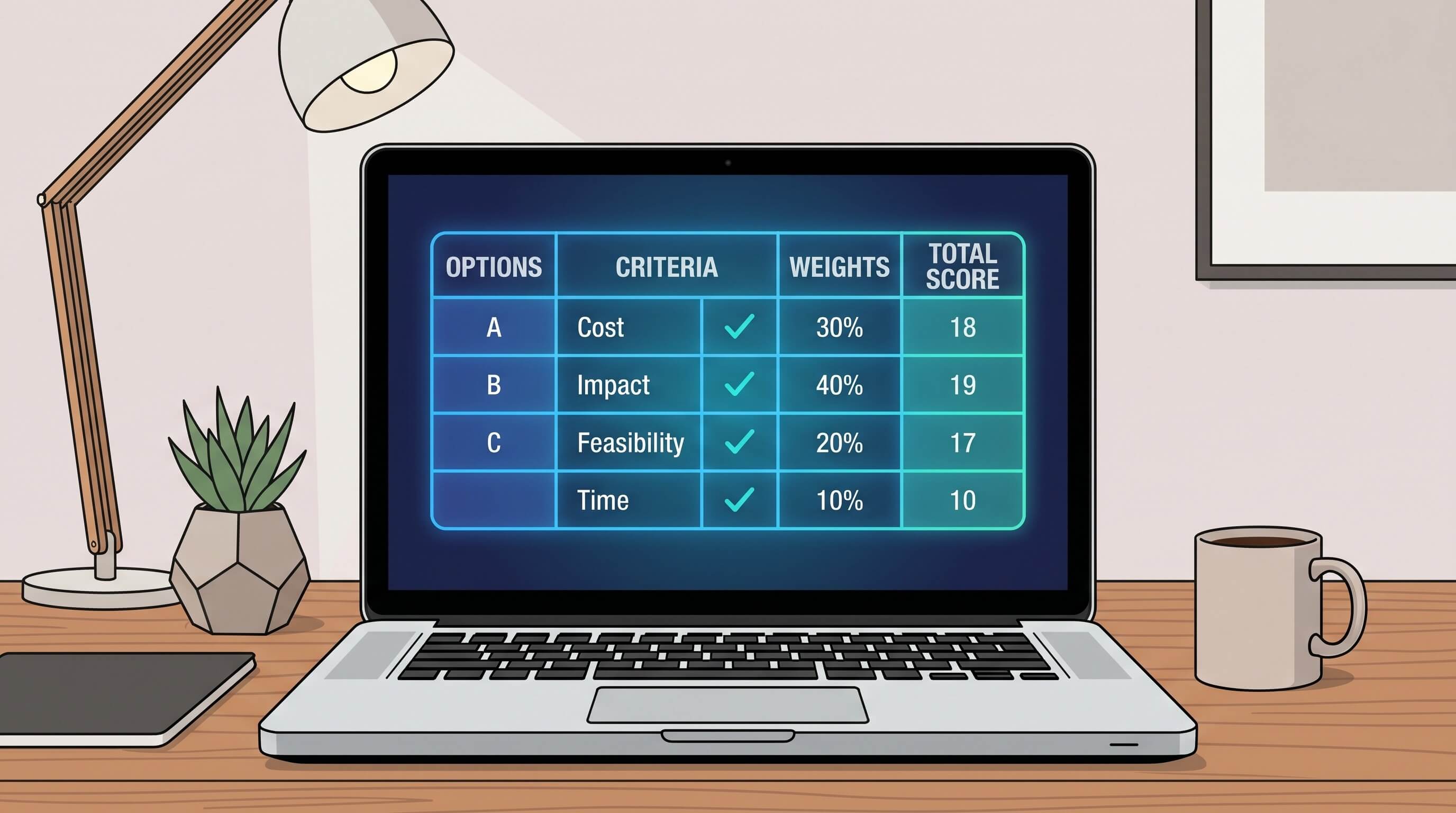
Weighted decision matrix: Criteria were weighted as follows: collaboration and documentation 30, ease of adoption 20, engineering workflow support 20, automation and integrations 15, total cost 15. Notion scored 9, 8, 7, 8, and 9 respectively, producing a weighted total of 8.30. Jira scored 6, 5, 10, 9, and 7 for a total of 7.20. Asana scored 8, 9, 6, 7, and 6 for a total of 7.35. ClickUp scored 7, 6, 7, 8, and 8 for a total of 7.10.
Recommendation with rationale: Choose Notion if the company wants one system that supports planning, documentation, meeting notes, lightweight roadmapping, and cross-team visibility without adding another knowledge base. Its main weakness is deeper engineering workflow structure, so teams with strict release governance may still prefer Jira despite the lower blended score.
Sensitivity analysis: If engineering workflow support rises from 20 to 35, Jira becomes much more competitive and may overtake Notion, especially if the company already uses GitHub and wants stronger issue discipline. If collaboration and documentation fall below 20, Asana also narrows the gap. That means the decision is robust only if the organization truly values a shared operating system over a specialist tracker.
Next steps before committing: Run a two-week pilot with one live project, measure onboarding time, check migration friction, and ask each function to list one blocker that would make the chosen tool fail in practice.
الاختيار بين عدة خيارات جيدة هو المكان الذي تهدر فيه الفرق وقتاً كبيراً. يبدو النقاش منتجاً، لكن المعايير تبقى ضمنية، والصوت الأعلى يؤثر في النتيجة، ثم يُعاد فتح القرار بعد أسبوعين. هذا الـ Prompt يعالج المشكلة عبر تحويل المفاضلات إلى مصفوفة مرجحة يمكن للجميع مراجعتها.
البنية هنا مهمة. قسم Role يدفع النموذج إلى وضعية المحلل بدلاً من العصف الذهني العام. قسم Context يحدد أهمية القرار والقيود والعوامل غير القابلة للتفاوض، بحيث تبقى التوصية مرتبطة بقرار عمل حقيقي لا بتفضيل نظري. ثم يأتي قسم Task ليقوم بالعمل الأساسي: تقييم كل خيار، شرح سبب كل درجة، حساب المجاميع المرجحة، ثم اختبار النتيجة عبر sensitivity analysis.
وهذا الجزء الأخير هو ما يجعل هذا الـ Prompt جديراً بالحفظ. Prompt المقارنة العادي يعطيك قائمة مرتبة فقط. أما هذا فيوضح ما إذا كان الفائز سيبقى فائزاً عندما يتغير وزن المعيار الأهم. وإذا كان تغيير بسيط في الوزن يقلب النتيجة، فالمشكلة الحقيقية ليست الأداة أو الـ Vendor، بل غياب التوافق بين أصحاب المصلحة.
كما أن هذا الـ Prompt يحد من أحد إخفاقات AI الشائعة: إجابات واثقة مبنية على معلومات ناقصة. قسم Constraints يطلب من النموذج كشف البيانات المفقودة، ووضع أصغر افتراض معقول، والتنبيه إلى الحالات التي قد لا يكون فيها الخيار الأعلى نقاطاً هو الخيار العملي الأفضل. بذلك تحصل على مخرجات أقرب إلى decision memo من كونها تخميناً أنيقاً.
يمكن استخدامه لاختيار البرمجيات، وقرارات التوظيف، ومراجعة الوكالات، ونماذج التسعير، ومفاضلات roadmap، أو أي قرار آخر تتنافس فيه عدة خيارات جيدة عبر معايير مختلفة. والنتيجة سهلة النقل إلى مستند، وسهلة الدفاع عنها في اجتماع، ويمكن الرجوع إليها لاحقاً إذا تغيرت الافتراضات.