مُفسِّر اختبار A/B: إطلاق، تعليق أو إلغاء في Prompt واحد
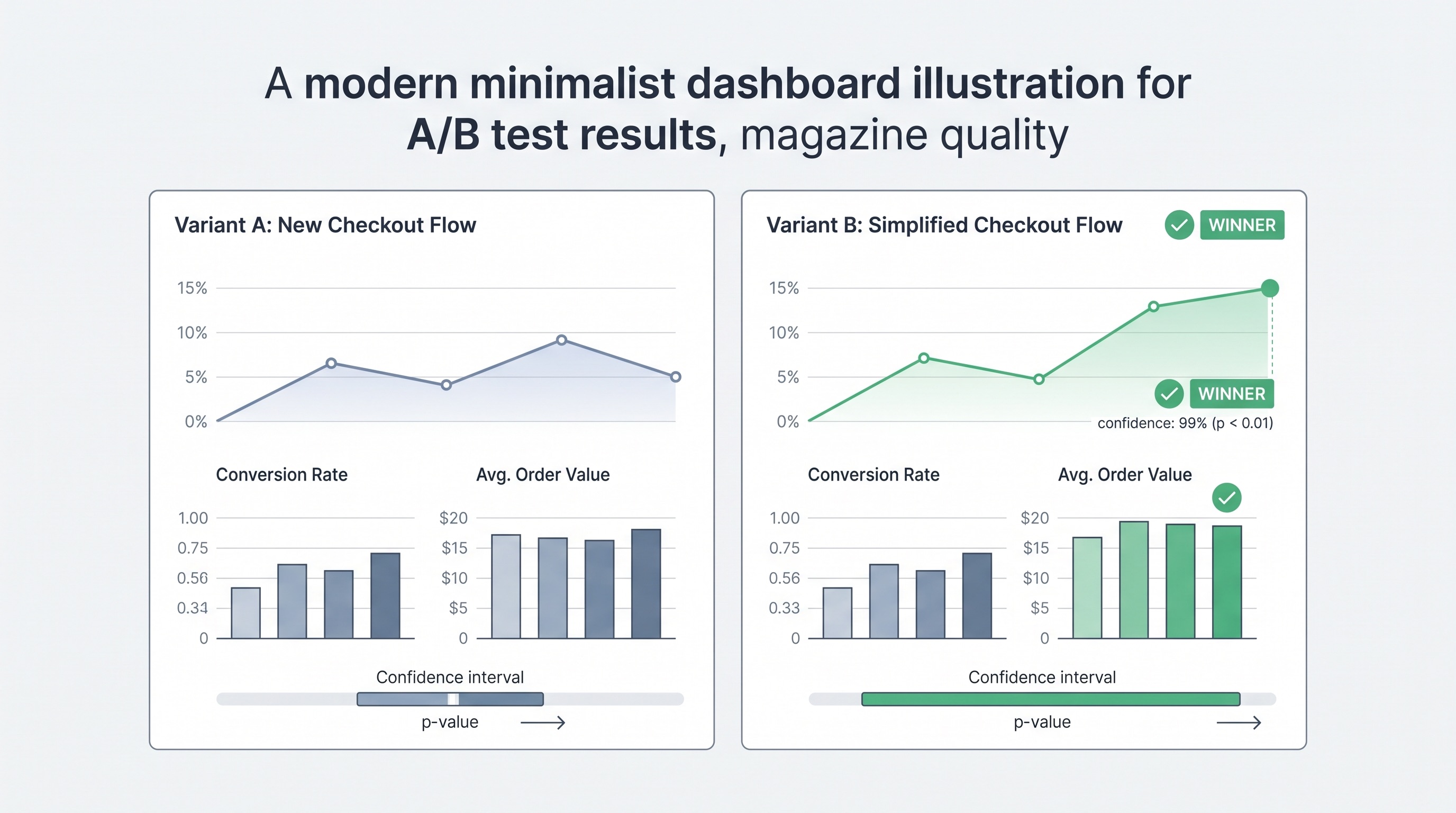
لماذا تهم هذه المطالبة
Bad ship/kill calls are expensive in both directions. Shipping a false positive locks in code that looks like a winner in the dashboard but quietly erodes revenue for months before anyone traces it back to the test. Killing a real winner because the raw numbers looked shaky under-delivers growth you already earned. And teams that 'peek' at results early and stop tests as soon as the trend looks good introduce a well-documented bias that inflates the apparent win rate of every experiment program — this prompt forces a power and significance check before any of that can happen.
فيم نستخدمها
You're a growth PM and your two-week checkout redesign A/B test just wrapped. Leadership wants a ship/no-ship call in tomorrow's roadmap review, but the raw dashboard just shows a conversion rate that went up — it doesn't tell you if that's a real 5% lift or noise that will vanish next month, and nobody on the team has time to run the statistics by hand before the meeting.
المطالبة
Act as a senior product analyst and growth data scientist with deep expertise in experimental design and statistical inference for digital products.

CONTEXT:
I ran an A/B test with the following setup:
- Test name / hypothesis: [TEST NAME/HYPOTHESIS]
- Primary success metric: [PRIMARY SUCCESS METRIC]
- Control group result: [CONTROL METRIC AND VALUE]
- Variant group result: [VARIANT METRIC AND VALUE]
- Sample sizes: [SAMPLE SIZES] (control vs. variant)
- Test duration: [TEST DURATION]
- Guardrail metrics tracked (if any): [GUARDRAIL METRICS, IF ANY]
- Any other context (traffic source, platform, seasonality, known anomalies): [ADDITIONAL CONTEXT]

TASK:
Analyze this experiment and produce a ship/hold/kill recommendation. Your analysis must:
1. Calculate or estimate statistical significance (p-value or confidence interval) for the primary metric given the sample sizes provided.
2. Assess statistical power — flag explicitly if the sample size is too small to trust the result either way.
3. Distinguish statistical significance from practical/business significance — a "significant" result that moves the needle by a trivial amount is not a reason to ship.
4. Check the guardrail metrics for regressions, even if the primary metric looks like a win.
5. Give a clear final recommendation: SHIP, HOLD (extend test), or KILL — with your reasoning stated in plain terms a non-technical stakeholder can follow.

CONSTRAINTS:
- Do NOT recommend shipping on a result that is underpowered — say so explicitly and recommend the minimum additional sample size or duration needed instead.
- Explicitly flag possible novelty effects if the test ran less than 2 full business cycles (e.g., under 2 weeks for a weekly-cadence product).
- Explicitly flag risk of "peeking" bias if the numbers suggest the test may have been stopped early based on interim results.
- Never conflate correlation from a single test with certainty — mention confounding variables if the context suggests any (seasonality, traffic mix changes, etc.).
- Keep the tone direct and decision-oriented — this is going into a roadmap review, not a stats textbook.

OUTPUT FORMAT:
## Statistical Read
[Confidence interval / p-value, power assessment, in plain language]

## Business Interpretation
[What this actually means for the product and the metric that matters]

## Recommendation: [SHIP / HOLD / KILL]
[2-3 sentence justification]

## Caveats & Follow-Up
[1-2 risks or suggested follow-up tests]
النتيجة
Scenario: Checkout flow redesign test, e-commerce site, 14-day run.
Statistical Read
Control: 4.8% conversion (n=24,600 sessions). Variant: 5.05% conversion (n=24,450 sessions). That's a +5.2% relative lift. Running a two-proportion z-test on these numbers gives a p-value of approximately 0.041 — just inside the conventional 0.05 significance threshold, with a 95% confidence interval on the lift of roughly [+0.1%, +10.3%] relative. Post-hoc power at this effect size and sample size lands around 52%, well below the 80% threshold you'd want for a decision this consequential. In plain terms: the result is nominally significant, but the confidence interval is wide enough that the "true" lift could be barely above zero or as high as 10% — you don't have enough data to know which.
Business Interpretation
A +5.2% relative lift on checkout conversion is commercially meaningful if real — at your traffic volume that's roughly 60 incremental orders per day. But the wide confidence interval means you're not choosing between "ship" and "don't ship," you're choosing between "possibly a strong winner" and "possibly noise." The guardrail metric (average order value) held flat at -0.3% (not significant), so there's no evidence the variant is cannibalizing basket size to win on conversion rate. No red flags there.
Recommendation: HOLD
Extend the test by at least 7-10 more days to reach ~80% power at the observed effect size (approximately 34,000 sessions per arm). The 14-day window also only covers two weekly cycles, borderline for ruling out a novelty effect on a redesigned flow — extending the window addresses both the power problem and the novelty-effect risk simultaneously. Shipping now on a 52%-powered result risks locking in a false positive that erodes checkout conversion once the novelty wears off.
Caveats & Follow-Up
Check whether the lift is concentrated in mobile vs. desktop traffic — redesigns often show device-specific effects that average out misleadingly. Also confirm the test wasn't peeked at and stopped early; if the 14-day window was chosen after seeing early results trending positive, treat this read with additional skepticism and weight the extension recommendation even more heavily.
تقرأ معظم الفرق نتيجة اختبار A/B بنفس الطريقة: رقم المجموعة الضابطة، رقم المجموعة التجريبية، أيهما أعلى يفوز. هذه هي الطريقة التي يتم بها إطلاق النتائج الإيجابية الكاذبة والتي يتم بها قتل الفائزين الحقيقيين من قبل أصحاب المصلحة القلقين الذين يرون عينة صغيرة ويثير ذلك خوفهم. هذا Prompt موجود لفرض خمسة فحوصات تتجاهلها نظرة سريعة على لوحة المعلومات — الأهمية الإحصائية، القوة، الأهمية العملية، تراجع مؤشرات الحماية، ومخاطر التحيز مثل تأثير الجدة والنظر المبكر — قبل أن يلتزم أي شخص بقرار الإطلاق أو التعليق أو الإلغاء.
لماذا يعمل هذا الهيكل
يطلب قسم السياق عن قصد أحجام العينات ومدة الاختبار في البداية، وليس فقط المقاييس الرئيسية. حسابات الأهمية والقوة لا معنى لها بدونها، وهي بالضبط المعلومات التي يتركها معظم الناس عندما يلصقون "كانت المجموعة الضابطة ٤.٨٪، والمجموعة التجريبية ٥.٠٥٪" في نافذة محادثة متوقعين حكماً.
قسم القيود هو المكان الذي تكمن فيه القيمة الحقيقية. منع صريح لتوصية بـ "إطلاق" على نتيجة ضعيفة القوة يوقف نمط الفشل الأكثر شيوعاً: اختبار وصل إلى الأهمية الاسمية (p أقل بقليل من ٠.٠٥) ولكن لم يتم تشغيله لفترة كافية للوصول إلى حجم عينة موثوق. علم تأثير الجدة يحدد إعادة التصميم وتغييرات واجهة المستخدم التي ترفع مؤشراً مؤقتاً لأن المستخدمين يتفاعلون مع شيء جديد، وليس لأن التغيير أفضل بالفعل — وهو تمييز لا يظهر إلا إذا استمر الاختبار لفترة كافية لتغطية عدة دورات استخدام كاملة. علم انحياز النظر المبكر يعالج فخاً إحصائياً معروفاً: الفرق التي تفحص النتائج يومياً وتوقف الاختبار بمجرد أن يبدو جيداً، تدير فعلياً عشرات اختبارات الفرضيات الخفية، مما يرفع معدل الإيجابيات الكاذبة أعلى بكثير من ٥٪ الاسمية.
يقسم تنسيق المخرجات عن قصد "القراءة الإحصائية" عن "التفسير التجاري". قيمة p البالغة ٠.٠٣ لا تعني شيئاً لنائب الرئيس في مراجعة خريطة الطريق — ولكن "هناك فرصة حقيقية أن يكون هذا الارتفاع قريباً من الصفر" تعني شيئاً. فصل الاثنين يجبر النموذج على ترجمة الإحصائيات إلى جملة قابلة للاستخدام في اتخاذ القرار بدلاً من التوقف عند الرقم.
كيفية استخدامه بشكل جيد
املأ الحقول الموجودة بين الأقواس مباشرة من تصدير منصة التجارب الخاصة بك — لا تقرب الأرقام يدوياً، لأن حساب القوة يعتمد على أحجام العينات الفعلية. إذا لم يكن لديك مؤشر حماية رسمي محدد، اكتب "لا شيء متتبع" بدلاً من تركه فارغاً — هذه الفجوة بحد ذاتها تستحق الإشارة في المخرجات، لأن الإطلاق بناءً على مؤشر واحد دون فحوصات جانبية هو خطر بحد ذاته.